
Stainless Steel vs. Mild Steel: Choosing the Right Material for Your Industry
Selecting between stainless steel and mild steel is one of the most critical decisions in industrial fabrication. Both materials serve distinct purposes across aerospace, defense, pharmaceutical, and construction industries, yet their properties differ significantly in corrosion resistance, cost, and durability.
At Maple Dynamics, a precision steel fabrication specialist with manufacturing facilities in Gujarat, India, we help businesses worldwide make informed material choices for their projects. This comprehensive guide compares stainless steel vs mild steel to help you determine which material best suits your industrial application.
What is Stainless Steel? Properties and Composition
Stainless steel is a corrosion-resistant alloy containing a minimum of 10.5% chromium. This chromium content forms a protective oxide layer that prevents rust and staining, making stainless steel ideal for harsh environments. The family of stainless steels includes different grades tailored for specific applications.
Common Stainless Steel Grades
Type 304 Stainless Steel is the most widely used grade, offering excellent corrosion resistance and formability. This versatile grade finds applications in food processing equipment, kitchen appliances, and architectural elements. Its excellent weldability and resistance to many environments make it the go-to choice for general-purpose applications where hygiene and aesthetics matter.
Type 316 Stainless Steel provides superior corrosion resistance through the inclusion of molybdenum. This grade excels in applications demanding resistance to chlorides found in marine environments or de-icing salts. Chemical processing equipment, pharmaceutical manufacturing, and marine hardware typically specify Type 316 due to its enhanced ability to combat pitting and crevice corrosion.
Key Advantages of Stainless Steel
Exceptional Corrosion Resistance
The chromium oxide layer in stainless steel provides superior protection against moisture, chemical exposure, saltwater environments, and industrial pollutants. This inherent corrosion resistance eliminates the need for protective coatings, making stainless steel fabrication essential for industries requiring long-term durability in harsh conditions.
High Strength-to-Weight Ratio
Stainless steel delivers structural integrity without excessive weight, which proves critical for aerospace engineering applications, defense equipment, and architectural projects requiring load-bearing capacity. Engineers can specify thinner cross-sections while maintaining required strength, reducing overall project weight.
Superior Sanitary Properties
The non-porous surface of stainless steel prevents bacterial accumulation, meets pharmaceutical manufacturing standards, and complies with food-grade regulations including FDA approved grades. Healthcare facilities, food processing plants, and pharmaceutical manufacturers rely on stainless steel’s ease of cleaning and sterilization.
Lower Lifecycle Costs
While stainless steel carries higher upfront costs, it offers minimal maintenance requirements, extended lifespan often exceeding 30 years, no need for protective coatings, and lower total cost of ownership over time. Forward-thinking businesses calculate lifecycle economics rather than focusing solely on initial material costs.

Fabrication Considerations
Stainless steel fabrication requires specialized expertise. Different grades necessitate particular welding techniques, appropriate filler metals, and post-weld treatments to preserve corrosion-resistant properties. Machining stainless steel presents challenges due to its toughness and tendency to work-harden, often requiring specialized tooling, appropriate speeds, and coolants. At Maple Dynamics, our precision fabrication processes address these technical requirements, ensuring optimal results for global clients.
What is Mild Steel? Properties and Composition
Mild steel, also called low-carbon steel, contains up to 0.25% carbon. This composition provides excellent versatility, making it one of the most widely used materials in construction and manufacturing. The lower carbon content delivers superior weldability and machinability compared to higher carbon steels.
Key Advantages of Mild Steel
Cost-Effectiveness
Mild steel offers material costs typically 40-60% lower than stainless steel, making it economical for large-scale projects and budget-friendly for applications where corrosion isn’t critical. Construction firms and manufacturers working with tight margins often specify mild steel for interior structural applications.
Excellent Weldability and Machinability
Mild steel fabrication benefits from superior weldability with minimal specialized equipment, fast processing times, simplified manufacturing for complex shapes, and lower labor costs compared to stainless steel. Fabricators can work with mild steel using standard equipment and techniques, reducing both capital investment and training requirements.
Protective Coating Requirements
A critical consideration when selecting mild steel involves the mandatory requirement for protective finishes. Unlike stainless steel’s inherent corrosion resistance, mild steel requires galvanization through hot-dip zinc coating, powder coating for weather resistance, professional paint systems for outdoor applications, and regular maintenance to prevent rust. Maple Dynamics advises on optimal coating solutions based on environmental exposure and application requirements.
Stainless Steel vs Mild Steel: Direct Comparison
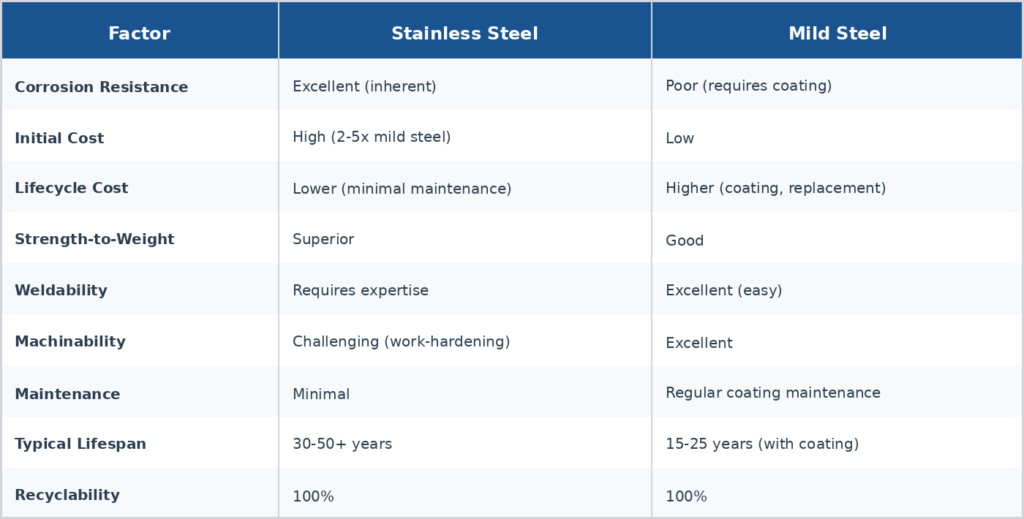
Understanding the key differences between these materials helps in making informed decisions for your specific application. Here’s a comprehensive comparison:
How to Choose: Stainless Steel vs Mild Steel
The optimal choice between stainless steel and mild steel depends on balancing multiple factors specific to your application. Consider the following decision framework:
Choose Stainless Steel When:
Corrosion exposure presents a significant concern, particularly in marine environments, chemical processing facilities, or outdoor installations subject to moisture. Stainless steel eliminates the ongoing cost and maintenance burden of protective coatings while ensuring structural integrity over decades.
Hygiene standards are critical, such as in pharmaceutical manufacturing, food processing plants, or healthcare facilities. The FDA-approved grades of stainless steel meet stringent regulatory requirements while providing easy cleaning and sterilization.
Lifecycle cost matters more than upfront investment. When project planning extends beyond initial construction to long-term operational costs, stainless steel’s minimal maintenance and extended lifespan often prove more economical despite higher material prices.
High strength-to-weight ratio is required, particularly in aerospace applications, precision equipment, or architectural projects where reducing weight while maintaining structural integrity provides significant advantages.
Choose Mild Steel When:
Budget constraints represent the primary consideration and the application environment doesn’t present significant corrosion risks. Interior structural applications, protected machinery components, and temporary structures often benefit from mild steel’s cost advantages.
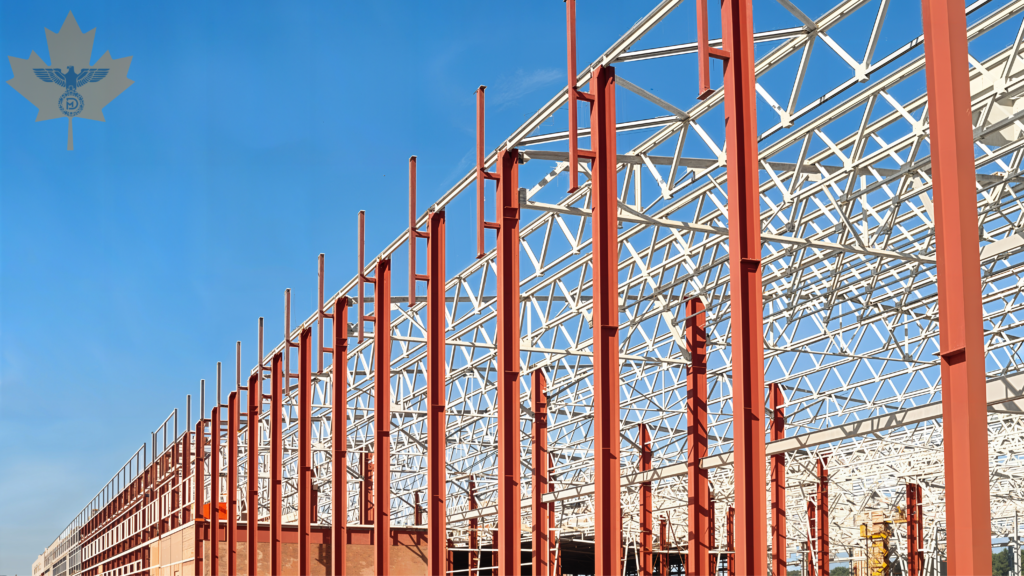
Large structural applications require cost-effective strength, such as building frames, bridge components, or heavy industrial equipment. The combination of mild steel’s excellent weldability, good structural properties, and lower material costs makes it ideal for large-scale construction.
Protective coatings can be reliably maintained through scheduled inspection and maintenance programs. Organisations with robust maintenance departments can achieve excellent longevity from properly coated mild steel components.
Maple Dynamics: Your Global Steel Fabrication Partner
At Maple Dynamics, our state-of-the-art facilities in Gujarat, India serve clients worldwide across aerospace and defense sectors, pharmaceutical manufacturing, shipbuilding and marine engineering, and construction and infrastructure. Our expertise encompasses material selection consultation, precision steel fabrication for both stainless and mild steel, custom finishing and coating solutions, and quality assurance meeting international standards.
Our consultation process evaluates the operational environment, including temperature ranges, chemical exposure, and moisture levels; performance requirements for strength, precision, and wear resistance; budget constraints covering both upfront and lifecycle costs; and aesthetic and regulatory considerations. This comprehensive approach, backed by our global experience and Gujarat production capabilities, allows us to recommend optimal steel types, grades, and fabrication techniques for projects worldwide.
Frequently Asked Questions: Stainless Steel vs Mild Steel
Is stainless steel always stronger than mild steel?
Not necessarily. While certain stainless steel grades possess high tensile strength, mild steel offers excellent structural strength for many applications. The choice depends on specific strength requirements, environmental conditions, and load-bearing needs. Maple Dynamics can analyse these requirements for your specific project.
Can mild steel be used in food processing?
Stainless steel grades 304 and 316 are preferred for food-grade applications due to FDA compliance, corrosion resistance, and non-porous surfaces. Mild steel requires specialised food-grade coatings and rigorous maintenance, making it impractical for most food contact scenarios.
How much does stainless steel cost compared to mild steel?
Stainless steel typically costs 2-5 times more per kilogram than mild steel. However, when factoring in lifecycle costs including maintenance, coating replacement, and potential structural replacement, stainless steel often proves more economical for corrosion-prone environments.
Can mild steel be used outdoors?
Yes, with proper protection. Mild steel requires galvanisation, powder coating, or high-quality paint systems to withstand outdoor conditions. Regular maintenance extends lifespan significantly. The success of outdoor mild steel applications depends on coating quality and maintenance schedules.
Which steel is better for marine applications?
Type 316 stainless steel with molybdenum provides superior performance in marine environments due to inherent saltwater resistance. Mild steel can be used with heavy-duty galvanisation but requires frequent inspection and maintenance to prevent corrosion.
Conclusion: Making the Right Material Choice
The stainless steel vs mild steel decision depends on balancing corrosion resistance, cost considerations, strength requirements, and maintenance capabilities. For applications demanding longevity and minimal upkeep, stainless steel delivers superior value. For budget-conscious structural projects with manageable corrosion risk, mild steel remains an excellent choice.
Ready to start your steel fabrication project? Email: info@mapledynamics.com Website: mapledynamics.com Request a Quote: Click ‘Request a Quote’ on our website for precision fabrication solutions
